ADHD Testing for Siblings: When More Than One Child Shows Signs

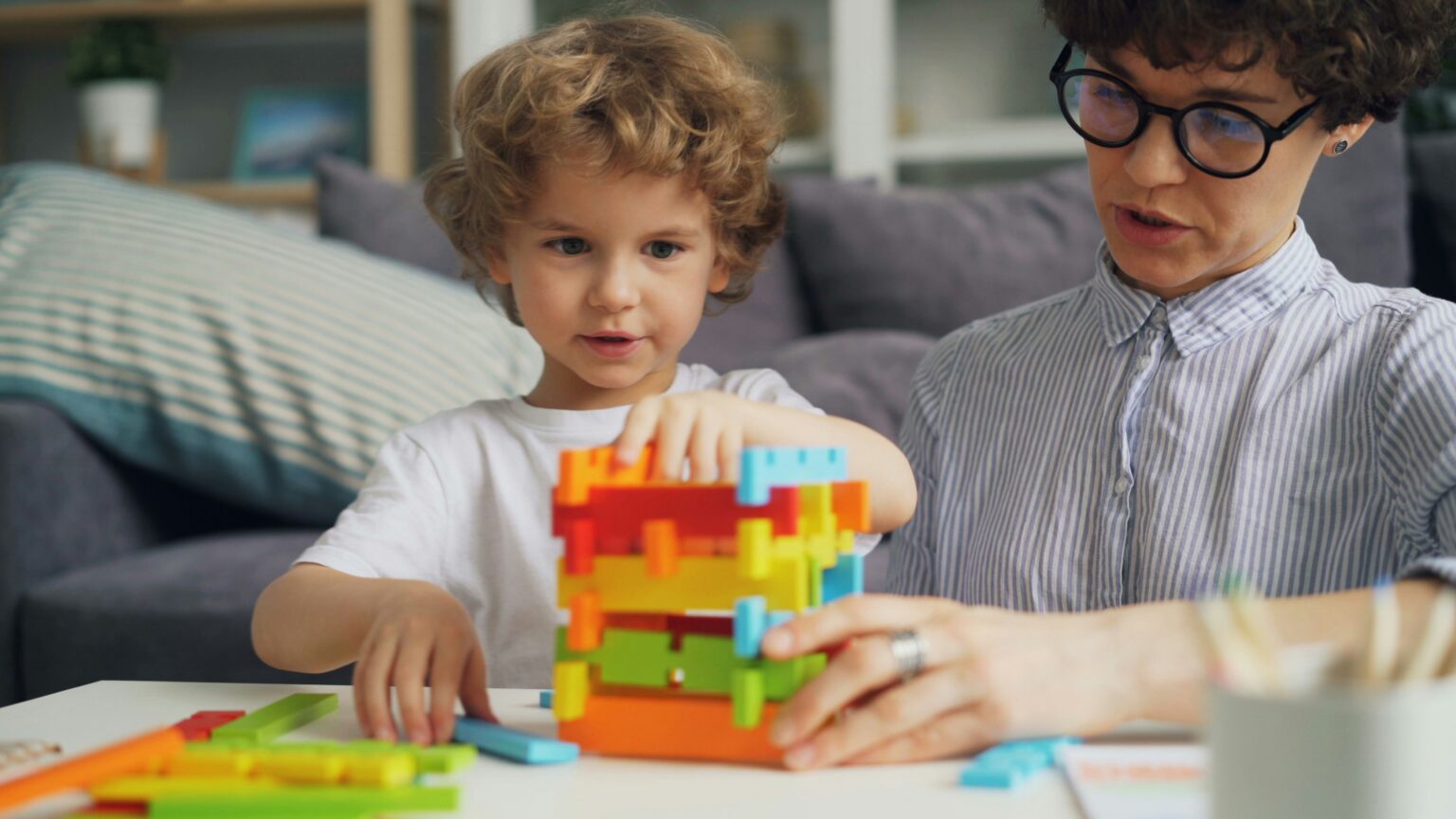
Families rarely walk into an evaluation thinking in neat categories. More often, a parent starts with one child. Maybe a teacher mentions daydreaming, rushed work, constant movement, or emotional blowups that seem out of step with the situation. Then, somewhere in the middle of that process, the parent looks across the dinner table and thinks, wait a minute, this sounds a lot like my other child too.
That moment is common, and it can be surprisingly disorienting.
When more than one child in a family appears to show signs of attention-deficit/hyperactivity disorder, the questions multiply quickly. Are the behaviors really similar, or are parents noticing them more because ADHD is already on their radar? Is it possible for siblings to have the same condition but look completely different? Should they be evaluated together, or one at a time? And how do you keep one child from becoming “the easy one” and the other “the difficult one” when the reality is more nuanced than that?
These are practical questions, not theoretical ones. ADHD testing in families with multiple children often reveals a pattern, but not a carbon copy. Siblings may share genetics, home routines, school expectations, and stressors, yet still present with different challenges, strengths, and support needs. Good evaluation work makes room for those similarities and those differences at the same time.
Why sibling patterns show up so often
ADHD tends to run in families. That does not mean every sibling of a child with ADHD will also have it, and it does not mean similar behaviors always point to the same diagnosis. It does mean that once one child is identified, it makes sense to pay closer attention to brothers and sisters who have been quietly struggling in their own way.
Sometimes the second child was easier to overlook because their symptoms were less disruptive. A child who fidgets, blurts out answers, and cannot stay seated usually draws adult attention fast. A sibling who stares out the window, loses track of instructions, and takes an hour to begin homework can slip under the radar for years, especially if grades are still passable. Parents often tell me that one child looked like the “classic” picture they expected, while the other looked anxious, disorganized, sensitive, or simply inconsistent.
Birth order can muddy the picture too. Older siblings often absorb more scrutiny because they are the first child moving through each developmental stage. By the time a younger sibling reaches those same milestones, parents may be either more relaxed or more alert, depending on what happened the first time around. If the older child has already been through ADHD testing, adults may spot patterns sooner in the younger child. That can be helpful, but it can also create a risk of assuming too much.
The reverse happens as well. A younger sibling with obvious hyperactivity may bring family attention to traits that were missed in an older child who learned to mask, overcompensate, or internalize distress. More than a few adults realize, during a younger sibling’s evaluation, that the older child has been white-knuckling school for years.
The signs may rhyme, but they rarely match
One of the biggest mistakes families make is expecting a side-by-side duplicate. Siblings may both have ADHD and still look almost nothing alike in daily life.
One child may be physically restless, impulsive, noisy, and quick to anger. Their challenges show up in the open. You know when they are struggling because everyone in the room knows.
The other may seem dreamy, slow to start, emotionally overwhelmed, and chronically forgetful. They lose papers, miss details, avoid tasks that require sustained effort, and look unmotivated when they are actually overloaded. Teachers sometimes describe this child as capable but inconsistent, a phrase that has become almost shorthand for “something is getting missed here.”
Even executive function weaknesses can land differently. One sibling may forget every soccer cleat, library book, and lunchbox. Another never forgets the object, but cannot estimate time, transitions badly, and melts down under multi-step instructions. Both may be dealing with regulation problems, but they need different supports.
Gender expectations also still shape what adults notice. Boys are often referred sooner for disruptive behavior. Girls are often overlooked when they are verbal, socially motivated, or academically strong enough to compensate. In a family with both sons and daughters, the contrast can be striking. Parents may spend years managing one child’s external symptoms while misreading another child’s internal strain as personality, perfectionism, or moodiness.
That is why ADHD testing should not be based on sibling comparison alone. “Looks like your brother” is not an assessment. It is a clue.
What ADHD testing is meant to answer
Families sometimes hope testing will deliver a simple yes or no. In real life, a thorough evaluation does more than label behavior. It tries to answer several questions at once.
First, are the child’s difficulties consistent with ADHD, and if so, what pattern best fits the presentation? Second, are the challenges showing up across more than one setting, such as home and school? Third, is anything else contributing, either alongside ADHD or instead of it?
That last question matters a great deal with siblings. Shared family stress, sleep problems, anxiety, learning disorders, sensory issues, trauma, depression, medical concerns, and uneven academic fit can all look like attention problems from the outside. When two children in the same house are struggling, parents sometimes assume a single explanation must cover both. Good clinicians resist that pressure. Similar surface behavior does not guarantee the same cause.
A thorough ADHD testing process usually involves a detailed developmental history, input from caregivers, school information, behavior rating scales, and direct clinical assessment. Depending on the setting and the clinician’s scope, it may also include cognitive testing, academic screening, or evaluation for learning differences and emotional concerns. The exact process varies, but the central task remains the same: understanding how this particular child functions, not how closely they match a sibling.
When to pursue evaluation for both children
There is no universal rule that siblings should be evaluated together. Sometimes it is efficient and sensible. Sometimes it creates confusion.
If two children are both showing persistent, impairing signs, not just occasional overlap, it is reasonable to ask about separate evaluations during the same general period. That can help families move faster, reduce months of uncertainty, and prevent one child from being left behind because the household is already consumed by another child’s needs.
At the same time, “persistent” and “impairing” are the key words. A child who is loud, active, or messy is not automatically a child who needs ADHD testing. The question is whether attention, impulse control, emotional regulation, organization, or task persistence are interfering in a meaningful way with school, friendships, daily routines, or self-esteem.
One practical marker I often watch is effort-to-output ratio. If a child is spending a remarkable amount of energy to produce ordinary results, or still falling short despite substantial effort, that deserves attention. Another is chronic conflict around routine expectations that peers of similar age can usually manage with less friction. The details matter. Forgetting homework once is ordinary. Losing track of assignments week after week, despite reminders and consequences, is something else.
The danger of the “copy and paste” diagnosis
Parents who have already gone through one evaluation often become quite skilled observers. That is a strength. They know the language, they recognize patterns, and they can often describe symptoms clearly. The risk is that experience can slide into assumption.
A sibling may indeed have ADHD, but they may also have dyslexia, generalized anxiety, obsessive-compulsive traits, sleep apnea, language disorder, autism spectrum traits, or a combination of factors. Children who are chronically anxious can appear distractible because their mental bandwidth is tied up in worry. Children with learning disorders may look avoidant or inattentive only when tasks expose their skill gap. Gifted children with ADHD can present unevenly, performing far above grade level in one area and falling apart in another.
I have seen families relieved to identify ADHD in a second child, only to learn that the bigger issue was a reading disorder that had been masked by strong verbal ability. I have also seen the opposite, where years of tutoring failed because the child’s core problem was not laziness or poor instruction, but untreated attentional regulation.
The lesson is simple: familiarity helps, but it cannot replace a fresh evaluation.
What it can look like inside one household
Consider a common family pattern. An older brother, age ten, has obvious hyperactive and impulsive symptoms. He interrupts, leaves his seat, forgets directions, and talks nonstop. School referrals come early. His younger sister, age eight, gets decent grades and causes few disruptions. She is described as sweet, quiet, and a little disorganized. Nobody worries much at first.
Over time, however, her homework takes two hours. She cries over simple tasks, loses materials several times a week, and seems exhausted by the effort of keeping up. Her room is a maze of half-finished projects. She misses parts of oral instructions and often says “I forgot” with genuine confusion rather than defiance. Because she is not setting off alarms at school, adults assume she is managing. She is not.
If both children complete ADHD testing, the findings may show ADHD in both, but with different symptom patterns and different support priorities. The brother may need help with inhibition, transitions, and classroom behavior. The sister may need support for sustained attention, working memory, task initiation, and the emotional toll of chronic compensation. The diagnosis might be shared. The plan should not be identical.
Another family may have two boys who seem similar on the surface, both active and distractible, yet one has ADHD while the other is primarily sleep deprived and anxious. Shared chaos at home can create parallel behavior without a shared diagnosis. That is why the evaluation process needs to widen the lens before narrowing it.
Timing, logistics, and the reality of family bandwidth
There is also a practical side to this. Evaluations cost time, emotional energy, paperwork, and often money. Families juggling work schedules, school meetings, and childcare may wonder whether they should push for both children to be assessed at once or stagger the process.
There is no perfect formula, but a few factors usually guide the decision. The first is urgency. If one child is in clear academic or emotional decline, that child should not wait simply because a sibling might also need assessment. The second is https://jaidenchze875.opalvector.com/posts/how-to-find-the-right-clinic-for-adhd-testing availability. Some practices can coordinate sibling evaluations efficiently, while others have long waitlists that make piecemeal scheduling unavoidable. The third is parental capacity. When families are stretched thin, taking on too many moving parts at once can reduce the quality of follow-through after the evaluation is done.
A staggered approach can be useful when the picture is clearer for one child than the other. It allows parents to gather better school feedback and observe whether concerns persist after a few targeted changes. At the same time, waiting too long out of fear of overreacting can leave the quieter child unsupported for years. I have met many adolescents who say some version of, “My sibling got help because their problems were visible. I learned to hide mine.”
That sentence stays with people.
How schools can help, and where they can mislead
Schools are often the first place patterns become visible because they ask children to sustain attention, shift tasks, manage materials, regulate behavior, and tolerate boredom for long stretches. Teacher input is valuable, but it should be interpreted carefully, especially when siblings are involved.
Some teachers know one sibling and unintentionally filter the other through that experience. If an older brother was highly disruptive, a quieter younger sister may seem problem-free by comparison. On the other hand, if a family is already known to the school as dealing with ADHD, staff may assume a younger child’s struggles fit the same script before enough evidence is gathered.
The best school observations are specific. “Has trouble focusing” is less useful than “misses multi-step directions unless they are repeated,” “begins independent work several minutes after peers,” or “rushes through assignments and makes frequent careless errors.” Concrete examples help clinicians separate developmentally typical behavior from a consistent pattern of impairment.
Parents can support that process by asking for details rather than labels. What times of day are hardest? Which tasks break down? Does the child participate verbally but fail to finish written work? Are there social consequences? Has the difficulty changed with increasing academic demands? Specificity usually tells the truth faster than global impressions.
Talking to siblings without turning it into a family identity
Children notice more than adults think. If one sibling is being evaluated, medicated, or receiving school accommodations, brothers and sisters are already forming their own explanations. When more than one child shows signs, parents often worry about making ADHD feel like a family brand.
The answer is not secrecy. It is precision.
Children do well when adults explain that brains manage attention, energy, emotions, memory, and planning in different ways. Some kids need extra support in those areas, just as others need help with reading, speech, or anxiety. The goal of ADHD testing is not to decide who is “bad” or “broken.” It is to understand how each child learns and functions best.
The language matters. Avoid saying one child “has it worse” unless there is a clear clinical reason and a private setting for that conversation. Avoid using one sibling as the benchmark for the other. Even casual comments such as “you’re just like your brother” can land heavily, especially if the household is already stressed by behavior concerns.
Children also benefit from hearing what is going well. If one sibling is creative, socially intuitive, funny, mechanically gifted, or intensely curious, say so plainly. If another is persistent, empathetic, or verbally sophisticated, name that too. ADHD can shape daily life significantly, but it should not flatten a child into a profile of deficits.
After diagnosis, equal treatment is not the same as fair treatment
This is where many families get tripped up. If two siblings both receive an ADHD diagnosis, parents often feel pressure to respond symmetrically. The same rules, same systems, same rewards, same school requests. That feels fair. It often fails.
Fair treatment is responsive, not identical.
One child may do well with a visual checklist taped near the door. Another may ignore it completely and need a parent-guided launch routine for months. One may respond strongly to medication. Another may need dosage adjustments, a different class of medication, or a non-medication support plan due to side effects or coexisting anxiety. One may need movement breaks. Another may need reduced verbal load and written instructions. Even bedtime may require different approaches if one child is physically restless and the other mentally keyed up.
Parents usually do better when they think in terms of functions rather than labels. What specifically breaks down for this child? Is it starting, remembering, stopping, shifting, organizing, tolerating frustration, or reading social cues? Once the weak points are clear, support becomes more targeted and less emotionally charged.
A brief family reset can help:
- Name each child’s top two daily friction points.
- Identify one support that already helps, even a little.
- Remove one expectation that is unrealistic right now.
- Add one routine cue that reduces adult nagging.
- Reassess after two to three weeks, not two to three days.
That kind of adjustment tends to work better than launching a dozen new strategies at once.
The emotional layer parents carry
There is also a quieter part of this experience that many parents do not say aloud. When multiple children are struggling, adults often feel guilty in several directions at once. Guilty for missing signs. Guilty for comparing siblings. Guilty for feeling overwhelmed. Guilty for wondering whether genetics played a role. Guilty for not catching it sooner in themselves.
That last piece is not trivial. Sibling evaluations often bring parental self-recognition. A mother filling out rating scales may suddenly realize that her own school years, chronic lateness, forgotten forms, emotional intensity, and unfinished projects were not random character flaws. A father who has always described himself as disorganized or bad at paperwork may hear his child’s feedback and feel the floor shift under him. Families sometimes begin with one child and end up understanding the whole household differently.
That can be painful, but it can also be useful. Parents who recognize their own executive function challenges often become more compassionate and more realistic. They stop building family systems that depend on everyone remembering everything all the time. They externalize reminders, simplify routines, and lower the amount of verbal repetition required to get through a normal day.
What matters most moving forward
When more than one child shows signs, the task is not to prove whether the children are the same. It is to understand how each child is struggling, where those struggles are showing up, and what supports will actually reduce friction and improve functioning.
ADHD testing can be a powerful tool in that process when it is approached thoughtfully. It helps families move from vague worry to specific understanding. It can prevent years of blame, especially for the child whose symptoms are quieter or easier to misread. It can also uncover other issues that deserve attention, which is just as important as confirming ADHD itself.
The families who navigate this best are rarely the ones with the most orderly houses or the fastest answers. They are the ones willing to stay curious. They notice patterns without jumping to certainty. They let each child be fully seen. And they remember that two siblings can share a diagnosis, a last name, and a home, yet still need very different kinds of help.
ElevateU Educational Psychology
90 Madison St Ste 304, Denver, CO 80206, United States
Phone: (303) 691-2020
FAQ About ADHD testing Denver
How do you get tested for ADHD?
Start by discussing concerns with a qualified healthcare professional. An evaluation considers symptoms, developmental history, daily functioning, and information from people who know the child in different settings.
Is there a single test that diagnoses ADHD?
No single test establishes ADHD. Clinicians consider multiple sources of information and other possible explanations, including sleep problems, anxiety, depression, and learning difficulties.
Why do evaluators ask parents and teachers for information?
Reports from home, school, and other settings help the evaluator understand patterns and how difficulties affect everyday life. Different observations are useful context to discuss.
What should families ask before an evaluation?
Ask about the provider's qualifications, the evaluation's scope, required records, fees, appointment length, and how findings will be explained. Contact ElevateU to discuss the appropriate educational assessment for your child.